
01
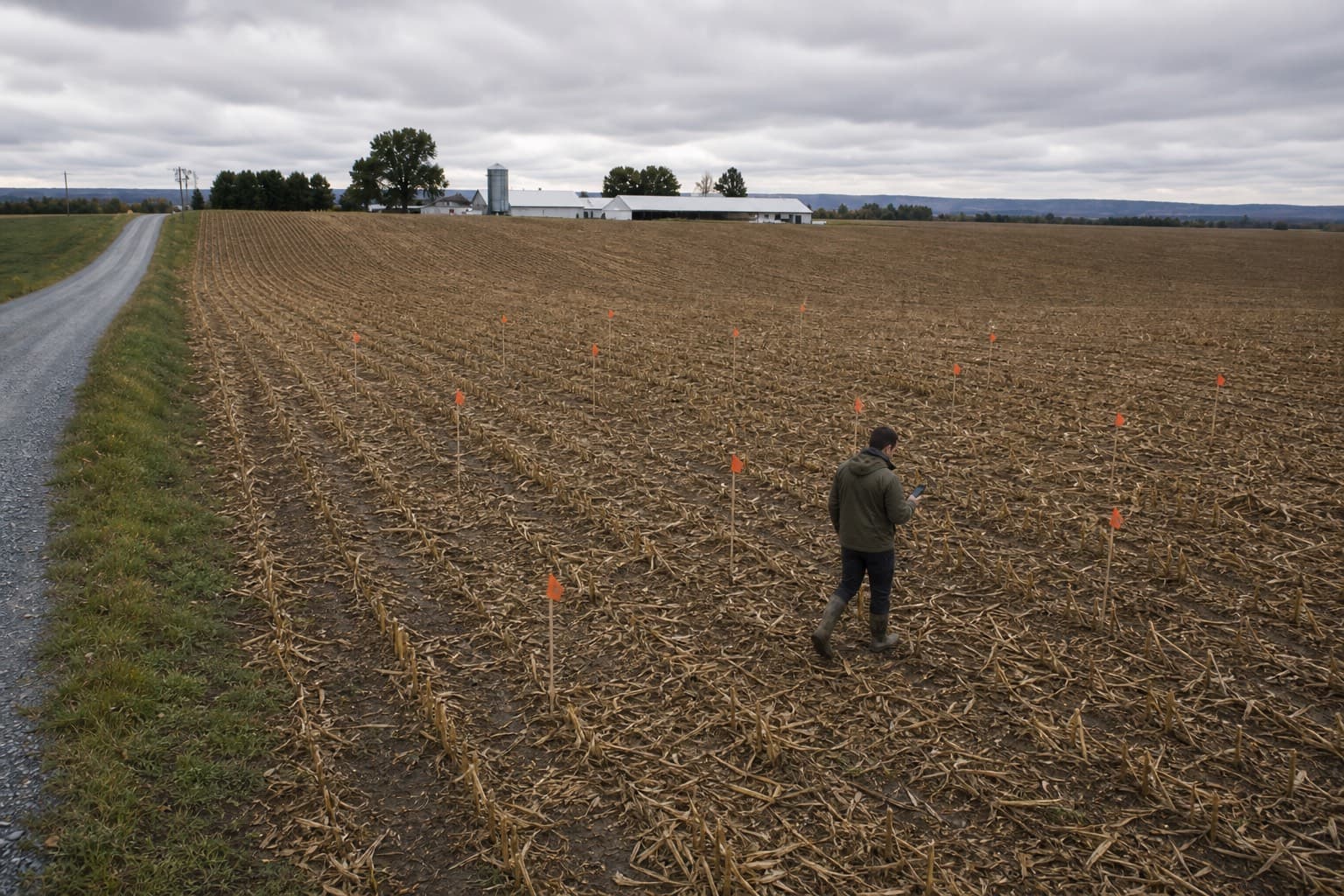
Plan the grid
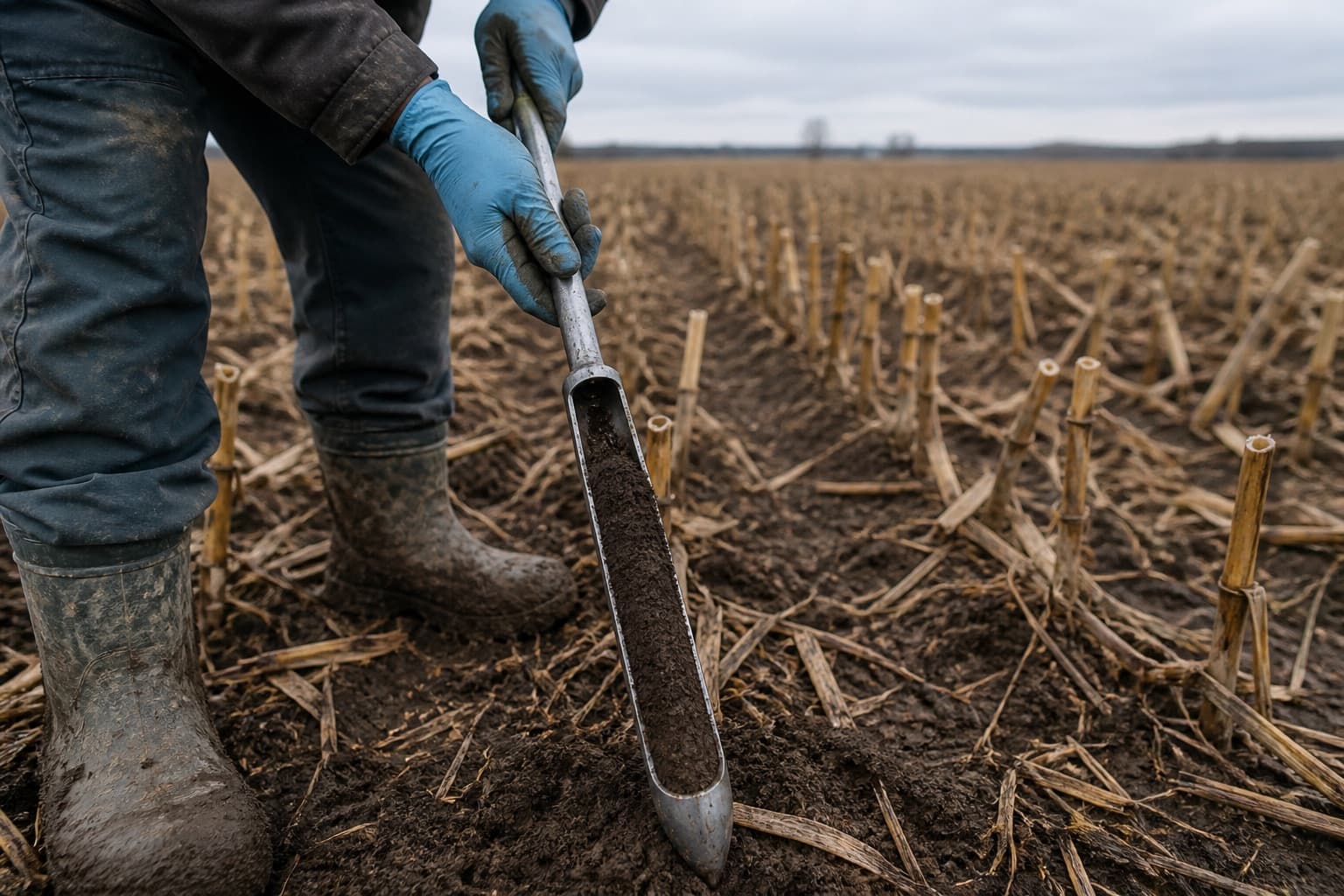
You select the fields. Together we define a georeferenced sampling grid, typically 10 to 50+ points per field, instead of the single composite sample conventional lab economics force today.
Laselys puts a full soil laboratory into a field-deployable instrument. A laser measures an agronomic panel in seconds per sample: georeferenced, on-site, with no chemicals, no shipping, and no laboratory queue.
The method
You select the fields. Together we define a georeferenced sampling grid, typically 10 to 50+ points per field, instead of the single composite sample conventional lab economics force today.
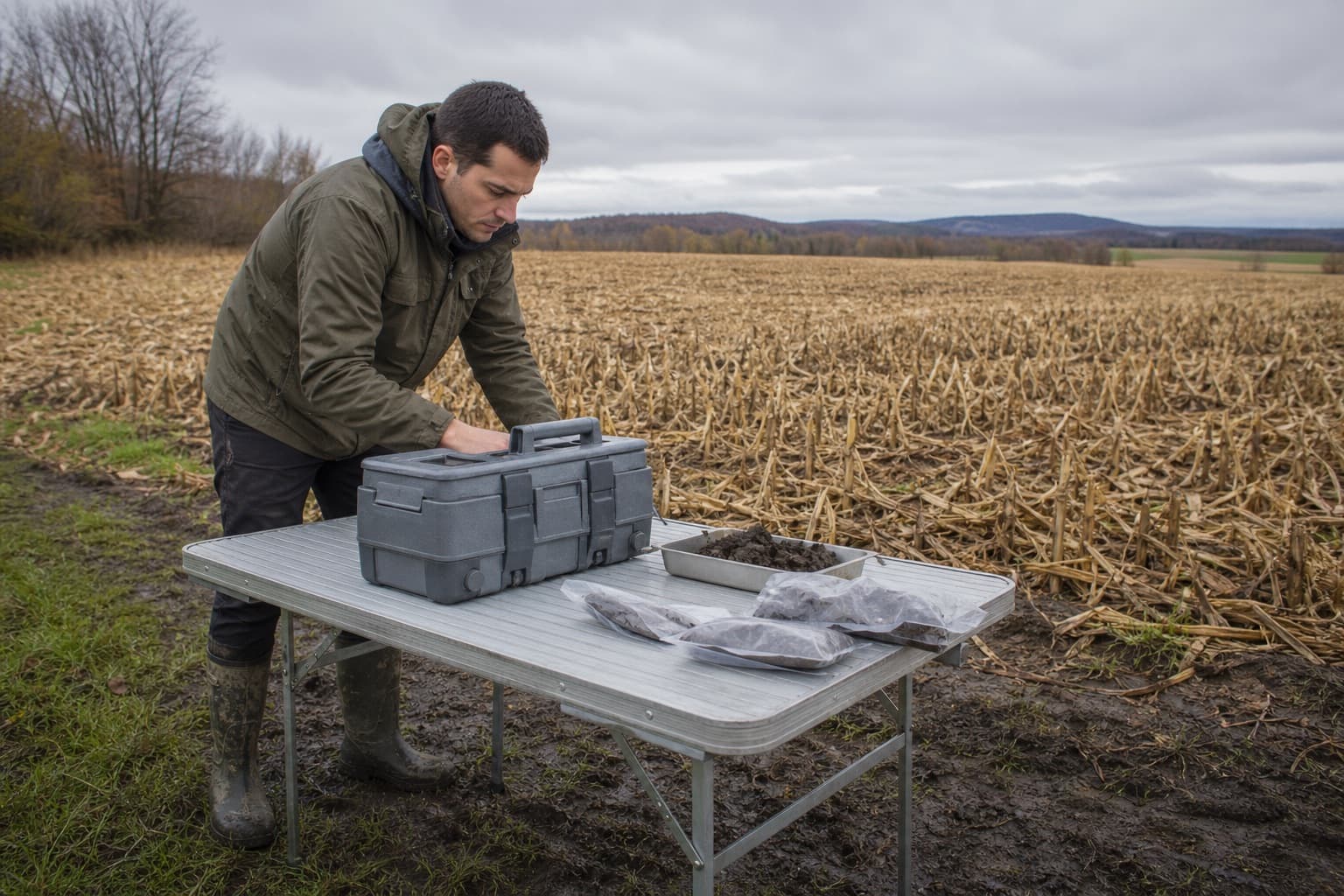
On the scheduled day, our technician arrives with the instrument. Samples are collected and analyzed on-site as the campaign proceeds.
Minimal preparation (pressed pellet, QR-coded for traceability), analysis in under a minute, results georeferenced automatically.
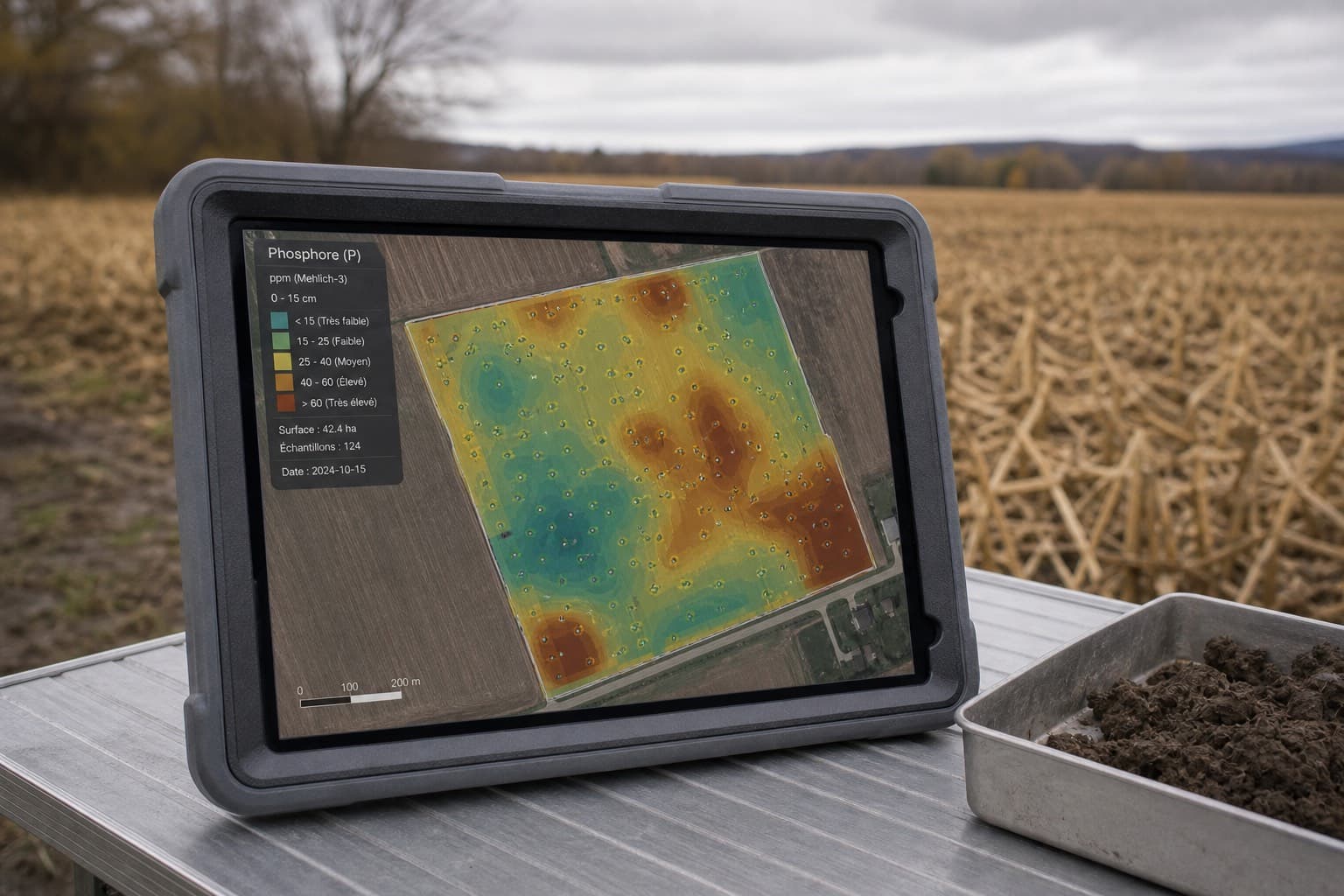
You receive a high-resolution georeferenced soil health map and a structured data file per field, delivered into your existing precision-agriculture workflow.
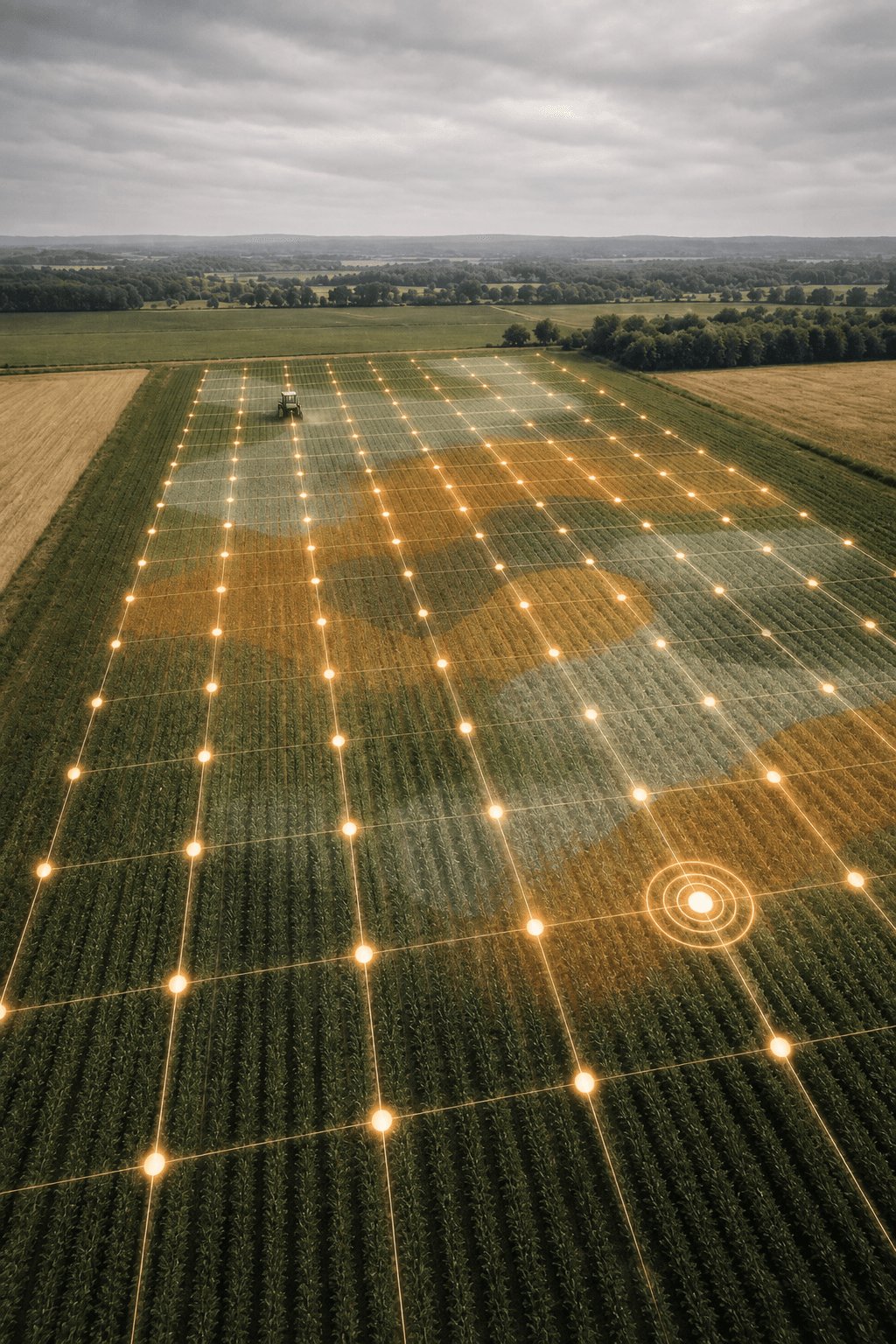
What changes
The lab: 15–20 business days. Us: seconds per sample, on site.
10–50× more points. Dense enough for variable-rate, too expensive, today, at the lab.
P, K, Ca, Mg, Al, pH, buffer pH, organic matter, CEC. No chemicals, no reagents, no waste.
Instruments
A laboratory LIBS analyzer, already in service. A field instrument coming soon !
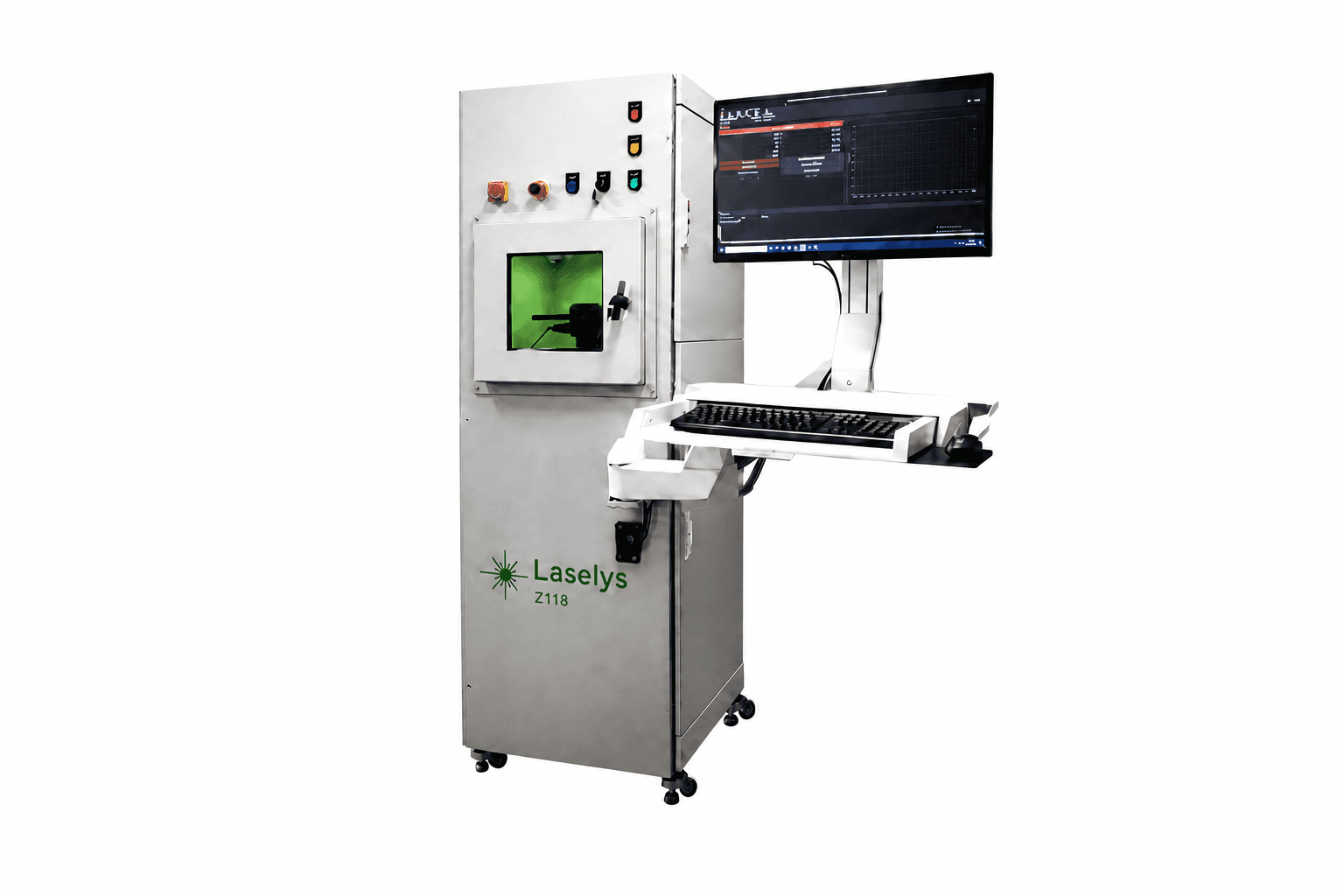
Benchtop LIBS elemental analyzer
Many elements in one pass, seconds per sample. The bench platform from twelve years of commercial LIBS.
LIBS
A pulse hits a pinch of soil. A speck flashes into plasma. Each element glows at its own wavelength: a fingerprint made of light. A spectrometer reads it, and we say what the soil holds, and how much.
LIBS identifies the chemical elements in soil: every naturally occurring element, nearly 85% of the periodic table. Macronutrients, micronutrients, metals: one shot reads them together.
What we can measure
Elemental range of the instrument. The agronomic panel delivered today is the calibrated subset against reference chemistry.
Every element in soil emits at its own wavelength. A single shot reveals them all at once.
1,300 pulses a second. 10,000+ readings per sample in under ten seconds. Soil is messy at the millimetre. That volume is what makes the number hold.
Raw light isn't a recommendation. Models, trained against accredited labs, turn 200–900 nm into P, K, pH, CEC.
Twelve years of mining-grade LIBS, in a field instrument. Dust, vibration, remote sites.
Who it's for
Campaigns across member farms. Faster, high-density analysis at a per-sample price that competes with the lab.
A georeferenced grid instead of a single composite, dense enough for variable-rate.
One shot, the full panel: P, K, Ca, Mg, Al, pH, organic matter, CEC. No chemicals, no shipping.
The trusted, low-cost source of ground truth that agronomy, carbon markets, and regulation will depend on.
Demonstration
We arrive with the instrument. You leave with a georeferenced grid and a data file. For agronomists, clubs-conseils, and advisory firms.